VIARE PANAMA
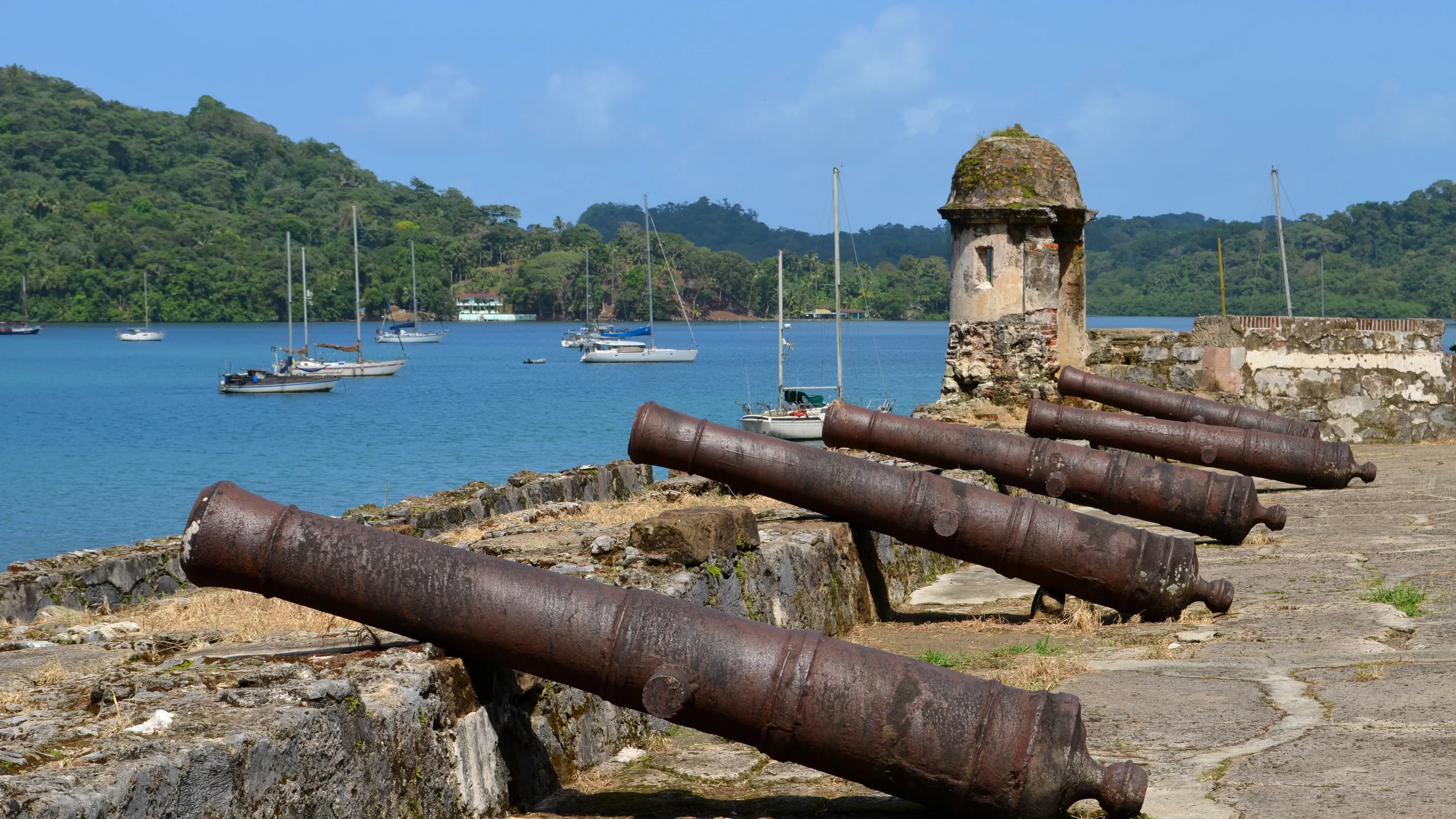
The colonial fortifications on the bay at Portobelo, Panama

The isthmus, beyond the city

Congos de Portobelo

Where the Silver Left

The Caribbean end of the treasure route, and the community that still performs what grew out of it.

08:30–18:00on the ground
1980UNESCO World Heritage
1 H 30each way by road

The case

Two centuries of silver left through this bay

Portobelo is where the treasure of Peru met the Atlantic. For two hundred years the silver came up the Pacific coast, crossed the isthmus by mule and sailed from here to Seville. What remains is the bay, the royal customs house and the forts built to hold it — taken, in the end, more than once.

The fortifications carry UNESCO World Heritage status, inscribed in 1980 under criteria (i) and (iv). They have also been on the List of World Heritage in Danger since 2012, which is part of why the visit is worth doing properly and worth doing now.

The second half of the day belongs to the Congos. Their ritual and festive expressions are recognized by UNESCO as Intangible Cultural Heritage of Humanity, and the performance takes place in the Batería Santiago La Gloria, staged by the community itself.

It suits the client who has done the Canal and wants the other half of the story: what the Canal inherited, and who lived through it.

The colonial fortifications on the bay at Portobelo, Panama

Getting there

Access and transfers

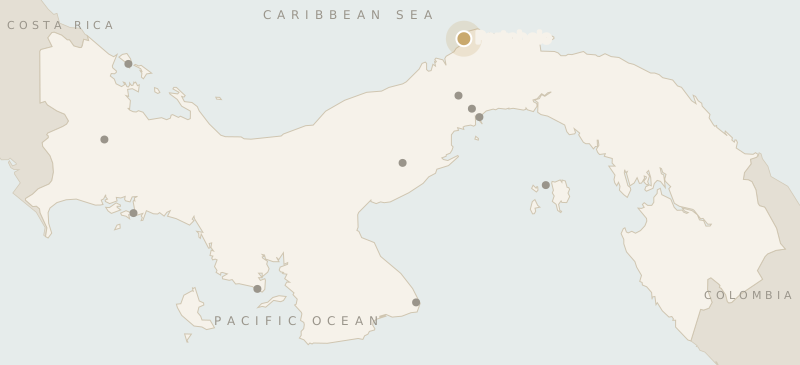
Map of Panama showing Congos de Portobelo
LegModeDurationNotes
Panama City → PortobeloRoad~1 h 30Transisthmian highway, then the Caribbean coast road
On the ground in PortobeloWalking08:30–18:00Monumental complex, bay-side lunch, Batería Santiago La Gloria
Portobelo → Panama CityRoad~1 h 30Return timed against the afternoon movement back into the city

Water and cold drinks travel with the group for the whole day. It is a full day by road, and we quote it as one.

When to go

When the coast behaves

The Caribbean side keeps its own calendar. It runs wetter than the Pacific and it moves faster than the forecast does, so we read the week rather than the season and set the departure accordingly.

The dry months, December through April, hold the steadiest mornings on this coast.

October 21 is the festival of the Black Christ of Portobelo and the town fills. It is extraordinary and it is a different kind of day, so we plan those dates on purpose.

The Congo performance is coordinated with the community in advance. It happens because it has been arranged, which is what makes it an encounter.

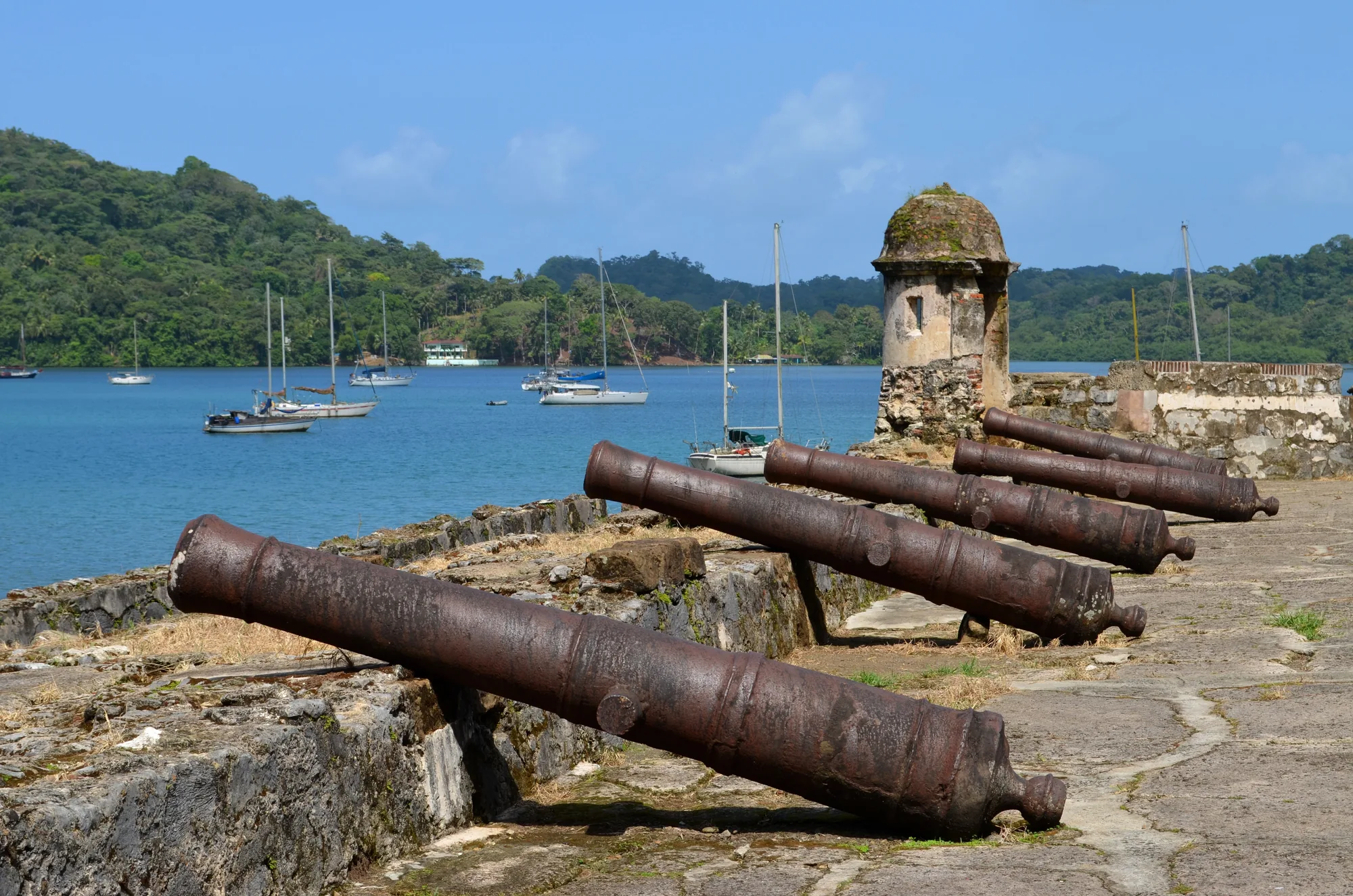
The colonial fortifications on the bay at Portobelo, Panama

What makes it worth the fare

Two centuries of Peruvian silver sailed from this bay.

Portobelo was the Caribbean terminal of the treasure route to Seville. Its fortifications have been a UNESCO World Heritage Site since 1980, and on the List of World Heritage in Danger since 2012.

What makes it worth the day

The Portobelo and San Lorenzo fortifications were inscribed on the UNESCO World Heritage List in 1980 under criteria (i) and (iv), and placed on the List of World Heritage in Danger in 2012.

The Congo culture of the Caribbean coast sits on UNESCO's Representative List of the Intangible Cultural Heritage of Humanity. The dance, the language and the dress all trace back to the communities of free and self-liberated Africans who built their own world in these hills.

The Real Aduana on the bay is where the silver was weighed and counted before it sailed. Standing inside it does more for the story than any museum in the capital.

Ninety minutes of road each way puts the Caribbean coast within a single day of a hotel in the banking district.

Where they stay

A day out of the city, and back to it

The colonial fortifications on the bay at Portobelo, PanamaCongos de Portobelo

Panama City

Base for the day

Portobelo works as a full day from the capital, so the night before and the night after stay wherever the rest of the program sits — usually Casco Antiguo or the banking district. The addresses we use are named on the Canal and Casco pages.

Images show the setting. Property photography is supplied by each hotel on request.

In practice

How the day is built

  1. 08:30 departure from the hotel. Ninety minutes by road across the isthmus, with water and cold drinks on board for the whole day.

  2. Morning on the monumental complex: the forts on the bay, the Real Aduana and the town, walked with a bilingual guide.

  3. Lunch beside the bay, then the Congo performance at the Batería Santiago La Gloria, staged by the community.

  4. Back in the capital by 18:00, with the departure hour set against the afternoon movement into the city.

Our preparation

What we arrange before the day exists

The Congo performance is booked with the community ahead of time, at a frequency that keeps the encounter worth having on both sides.

Lunch is confirmed with the restaurant on the bay for the group size, because capacity on this coast is small and the day rests on it.

Road conditions on the Caribbean side are checked the day before, and again on the morning itself.

Quoted separately on request: site entry fees, gratuities and anything beyond the services named in the day plan.

Ready to include this in your journey?

Tell us the dates and the shape of the trip. We quote NET for agencies and tailor-made for direct inquiries — the same program either way.

Start the conversation

Investment: each journey is crafted around you and your dates. Contact us to begin planning.