
Before you travel
The questions we answer most before a Panama trip. Entry rules checked against official sources in September 2026.
Citizens of the United States, Canada, the United Kingdom and the European Union enter as tourists visa-free. US and Canadian citizens may stay up to 180 days; UK and EU citizens up to 90 days. Other nationalities should confirm with the nearest Panamanian consulate.
A passport valid for at least six months, a return or onward ticket, and proof of funds of at least USD 500 in cash, card or a bank letter. Panama itself asks for three months of passport validity; six satisfies every government's advice. The customs declaration can be completed online before the flight.
A certificate is required when arriving from a country with yellow fever risk. The CDC recommends the vaccine for mainland areas east of the Canal, including Darién. Panama City, the Canal, the western provinces, the Pearl Islands and the San Blas islands sit outside that zone.
It is included in the airline ticket.
On the Pacific side, home to the capital, the Canal and the Pearl Islands, the dry season runs from mid-December to April. From May to November the rain usually arrives as an afternoon downpour and the country turns deep green. The Caribbean coast sees rain year-round, and the Chiriquí highlands stay at 68–77 °F by day and cooler at night. Humpback whales cross the Pacific from July to October, and quetzal season in the highlands runs from January to April.
Three to four days cover the capital, the Canal, Casco Antiguo and a rainforest morning at Gamboa. Six to seven add one region: Boquete, the Gulf of Chiriquí or Bocas del Toro. Eight to ten allow two. See our itineraries.
Thirty to forty-five minutes on the Corredor Sur toll road outside rush hour, longer at peak times. Every private transfer is timed around it.
A domestic flight of about an hour from Albrook Airport, several times a day. More on Bocas del Toro.
Fly to David, then drive about 40 minutes up into the highlands. By road from Panama City it is around seven hours. More on Boquete.
About three hours by 4x4 on the road to Cartí, with a passport check and entry fee at the Guna Yala checkpoint, then a boat of up to an hour to the islands. Small aircraft from Albrook also serve the island airstrips.
Yes, around the clock, airport included. Taxis charge an agreed fare, so settle the price before the ride.
Yes: 90 days with a US or Canadian license, three months with a UK photocard or Spanish license. An International Driving Permit is recommended.
The US dollar. The balboa is pegged one to one and circulates as coins alongside US coins. Cash of USD 10,000 or more is declared on entry and exit.
The US State Department rates Panama Level 2, Exercise Increased Caution (August 2026). Its restricted areas are parts of Darién and the Mosquito Gulf coast; the Canal, Casco Antiguo, Boquete, Bocas del Toro and San Blas lie well outside them. In the city at night, use ride-share or arranged transport.
In Panama City and the provincial capitals, yes. On the islands and in rural areas, drink bottled water; every VIARE transfer carries it chilled.
Type A and B at 120 V and 60 Hz, the same as the US and Canada. UK and EU visitors need an adapter.
UTC−5 all year: the same as New York in winter, one hour behind it in summer.
Spanish is the official language. English is widely spoken in hotels and tourism, and in the Afro-Caribbean communities of Bocas del Toro and Colón. Every guide we place is bilingual.
Many restaurants add a 10% service charge, so check the bill first. Guides, drivers and hotel porters are customarily tipped.
Light, breathable clothing, sun protection, insect repellent and a rain layer from May to November. A warm layer for Boquete and for strong air-conditioning. Panama City dresses smarter than a beach town: upscale restaurants expect long pants.
Mosquito-borne illnesses such as dengue are the main concern, so repellent matters. Panama City and the Canal area are free of malaria transmission; the CDC advises preventive medication for some regions, including Darién, Guna Yala, Bocas del Toro and Chiriquí. The leading private hospitals are in Panama City, and travel insurance with medical evacuation is recommended.
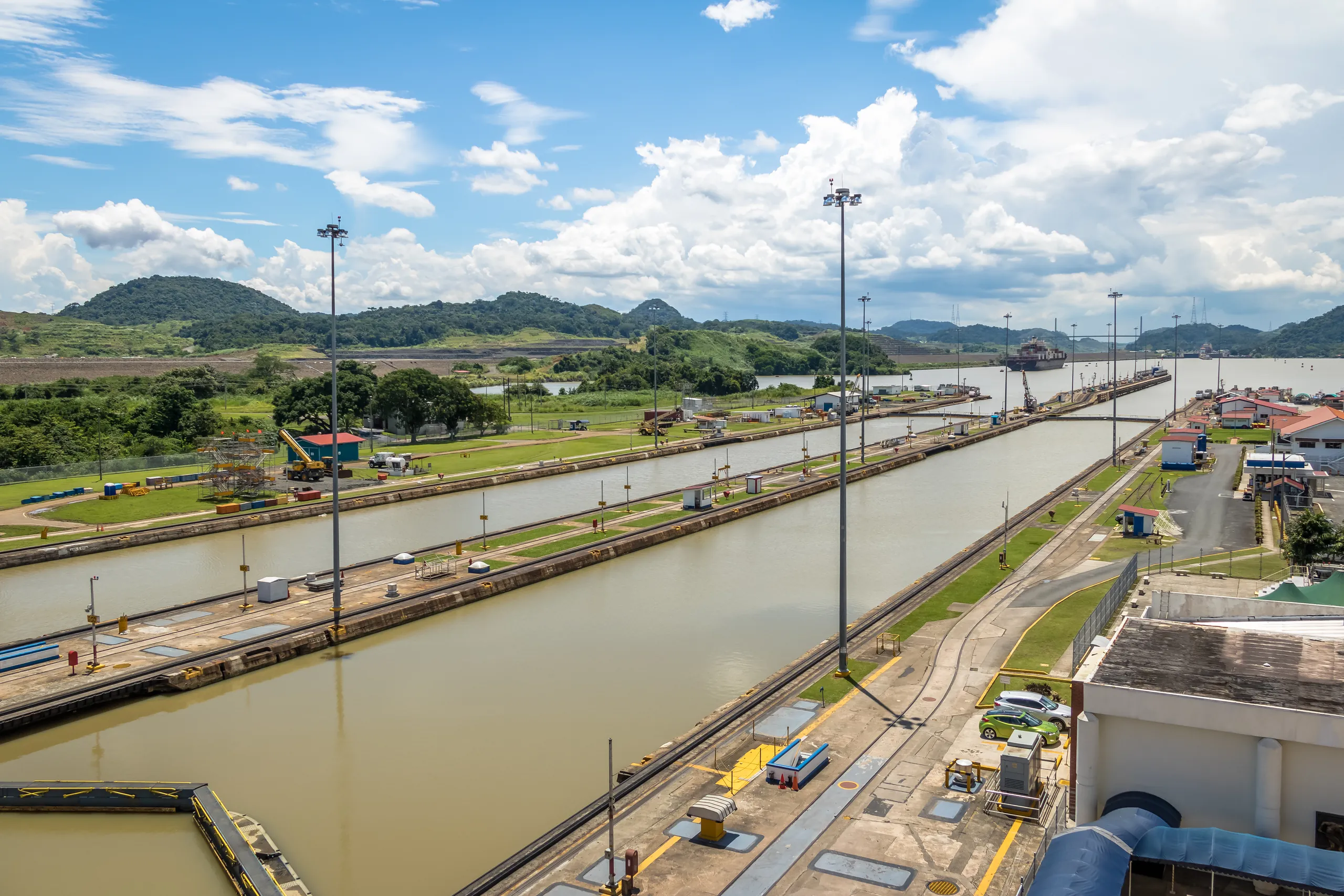
The visitor center opens daily from 08:00 to 18:00. Ships tend to pass mid-morning and mid-afternoon, on a schedule the Canal Authority sets each day. The Canal Legacy is planned around it.
Tell us the dates and the shape of the trip. We quote NET for agencies and tailor-made for direct inquiries — the same program either way.
Start the conversation